
Unleashing NVIDIA GRID 2.0
1 min read
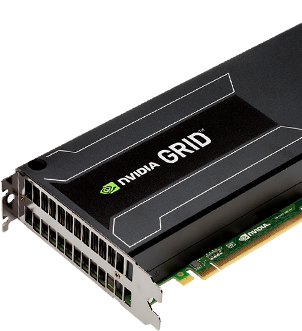 NVIDIA just released their GRID 2.0 GPU technology. In earlier articles I already described vGPU and the impact of GPUs in the datacenters. With this new release NVIDIA bumped up the use cases and performance characteristics to drive adoption of GPU within VDI and SBC implementations.
With GRID 2.0 the new Maxwell processor architecture for the NVIDIA GRID cards is introduced, while the former Keppler based K1/K2 could deliver a great user experience the new Maxwell’s will set the bar for user density without doing concessions on user performance.
How does vGPU work in one single image:
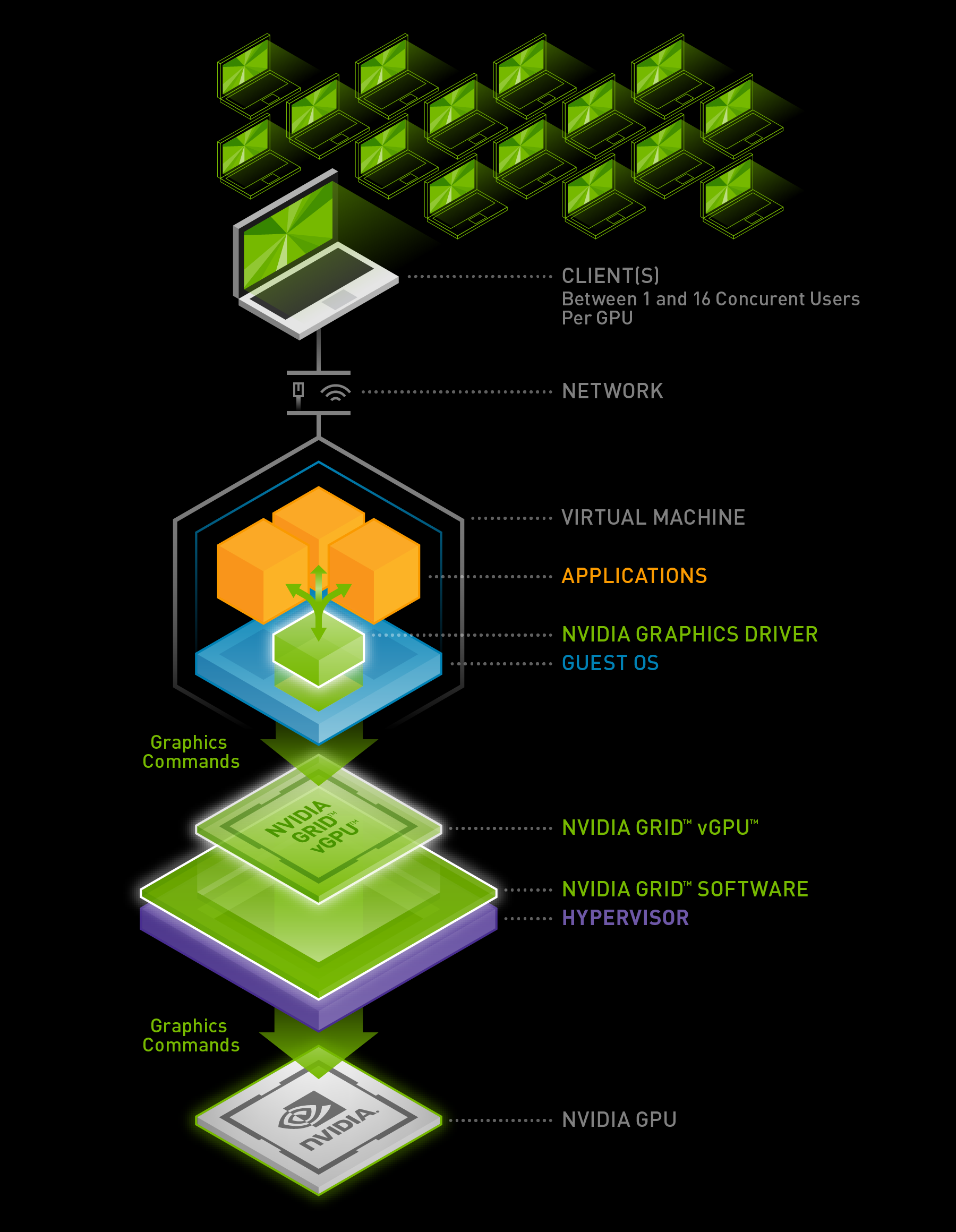
Source: NVIDIA Website
As an FYI: I recently learned that the K in K1/K2 stands for Keppler. The introduction of Maxwell leads to the M in M60/6 which are the newly introduced cards.
The benefits of GRID 2.0:
- Doubled user density: NVIDIA GRID 2.0 will allow you to push the newly introduced cards up to 128 users per server.
- Doubled application performance: Using the new Maxwell GPU architecture, GRID 2.0 will deliver twice the performance of before.
- Blade server support: Enterprises can now run GRID-enabled virtual desktops on blade servers.
- Linux support: Both Citrix and VMware now supports Linux so it makes sense to introduce Linux support for GRID 2.0 too. Enabling GPU powered desktops in a Linux based VDI environment.
Coming down to hard numbers and facts the M60 and M6 will add the following capabilities to your EUC deployments:

Compared to it’s predecessors the newer M60 and M6 will deliver a lot more CUDA Cores and are able to provide more power in general to enhance your EUC implementations. Hopefully this will drive vGPU adoption even more in the next following months.

Kees Baggerman
Latest posts by Kees Baggerman (see all)
- Citrix MCSIO on Nutanix AHV: A Solution to a Problem That Doesn’t Exist - June 10, 2026
- The Cloud Desktop CPU Lottery: What Are You Actually Running On? - June 2, 2026
- Your Cloud Desktop Is Running on Yesterday’s Silicon - May 21, 2026
- When the Orchard Ships Production Software: AI-Augmented Development in the Real World - May 17, 2026
- Nutanix Documentation Script v5.0: Visual Reports, Brand Templates, and Seven Embedded Diagrams - May 15, 2026

One Comment